

In the competitive landscape of e-commerce, crafting SEO-friendly product titles is paramount to success. A well-optimized product title not only informs potential customers about what you’re selling, but also plays a crucial role in determining how easily your products are discovered through search engines. This ultimate guide will delve into the essential strategies and best practices for writing product titles that rank high in search results, attract clicks, and ultimately drive conversions. Mastering the art of creating compelling and SEO-friendly product titles is a cornerstone of any effective e-commerce strategy.
From understanding the intricacies of keyword research and integration to optimizing character length for maximum visibility, this comprehensive guide will equip you with the knowledge and tools you need to elevate your product listings. Learn how to strike the perfect balance between incorporating relevant keywords for search engine optimization (SEO) and creating titles that resonate with your target audience, enticing them to click and explore your products further. By implementing the techniques outlined in this ultimate guide, you’ll be well on your way to crafting product titles that improve your search rankings and drive substantial growth for your online business.
Understanding the Importance of SEO-Friendly Product Titles
Product titles are the first point of contact between your product and potential customers on search engine results pages (SERPs). A well-crafted title can significantly impact your product’s visibility and click-through rate (CTR). Essentially, they act as a virtual storefront window, enticing shoppers to learn more.
SEO-friendly product titles help search engines understand what your product is about, allowing them to accurately index and rank your product pages. This increased visibility directly translates into more organic traffic and potentially higher sales. Conversely, poorly optimized titles can bury your products deep within search results, making them difficult for potential buyers to find.
Key benefits of optimized titles include:
- Improved search engine rankings
- Increased organic traffic
- Higher click-through rates
- Better user experience
- Enhanced brand credibility
Keyword Research for Product Titles
Effective keyword research is the foundation of SEO-friendly product titles. It involves identifying the terms your target audience uses when searching for products like yours. Understanding these search patterns is crucial for crafting titles that resonate with potential customers and improve search engine visibility.
Begin by brainstorming relevant keywords related to your product. Consider its features, benefits, and target audience. Utilize keyword research tools to expand your initial list and discover related terms with higher search volumes and lower competition.
Analyze the search volume and competition for each keyword. High search volume indicates strong demand, while low competition suggests greater opportunities for ranking. Strive for a balance between these two factors.
Consider long-tail keywords, which are longer, more specific phrases that target niche searches. While they may have lower individual search volumes, they often attract more qualified leads.
Best Practices for Writing Effective Product Titles
Crafting effective product titles requires a strategic approach. Accuracy is paramount; ensure your title clearly reflects the product offered. Avoid misleading or exaggerated claims.
Brevity is key. Concise titles are easier for users to scan and understand. Aim for a title length that balances detail with readability. Typically, under 60 characters is recommended for optimal search engine display.
Incorporate relevant keywords naturally. Prior keyword research will inform your choices, helping your product rank higher in search results. However, avoid keyword stuffing, which can negatively impact SEO.
Highlight key product features and benefits. Focus on what makes your product unique and desirable. Think about what problems your product solves for potential customers.
Consider using title case for improved readability and a professional appearance. Capitalize the first letter of each word, except for articles, prepositions, and conjunctions.
Optimizing Product Titles for Different Search Engines
While core SEO principles remain consistent, slight nuances exist in how different search engines interpret and rank product titles. Tailoring your approach can yield improved visibility and click-through rates.
Focus on user intent and relevance. Google’s algorithms prioritize titles that accurately reflect the product and satisfy the searcher’s query. Incorporate primary keywords naturally while maintaining readability.
Bing
Bing places emphasis on conciseness and clarity. Keep titles brief and descriptive, focusing on the most important product features. Brand recognition can also play a role in Bing’s ranking algorithm.
Other Search Engines
While Google and Bing hold the majority market share, consider other search engines relevant to your target audience. Research specific guidelines they might have regarding title length, keyword usage, and formatting. Consistency across platforms is key.
Common Mistakes to Avoid When Writing Product Titles
Crafting effective product titles is crucial for online visibility and sales. However, there are common pitfalls that can hinder your SEO efforts. Avoid these mistakes to maximize your product title’s potential:
Keyword Stuffing
Overloading your title with keywords appears spammy and can negatively impact your ranking. Focus on using relevant keywords naturally within the title.
Ignoring Target Audience
Write titles that resonate with your ideal customer. Consider their search intent and use language they understand.
Generic Titles
Titles like “Blue Shirt” provide little information. Be specific by including details like brand, material, and size.
Inaccurate Information
Misleading titles can damage customer trust. Ensure your title accurately reflects the product’s features and attributes.
Ignoring Title Length
Excessively long titles get truncated in search results. Aim for a concise title that clearly communicates the product’s value proposition while adhering to character limits.
Using Keywords Effectively in Your Product Titles
Keywords are the foundation of effective product titles. Relevant keywords tell search engines what your product is and help customers find it. Proper keyword integration boosts your product’s visibility and drives organic traffic.
Start by identifying the most relevant keywords for your product. Think like a customer. What terms would they use to search for this item? Tools like keyword research platforms can help you discover high-volume, low-competition keywords.
Once you have a list of potential keywords, prioritize them. Your primary keyword should be the most relevant and have the highest search volume. Incorporate this keyword naturally into your title, preferably at the beginning. Then, strategically include secondary keywords to further refine your targeting.
Avoid keyword stuffing. While it’s crucial to use relevant keywords, cramming too many into your title will make it look spammy and deter both search engines and potential customers.
A/B Testing Your Product Titles for Better Performance
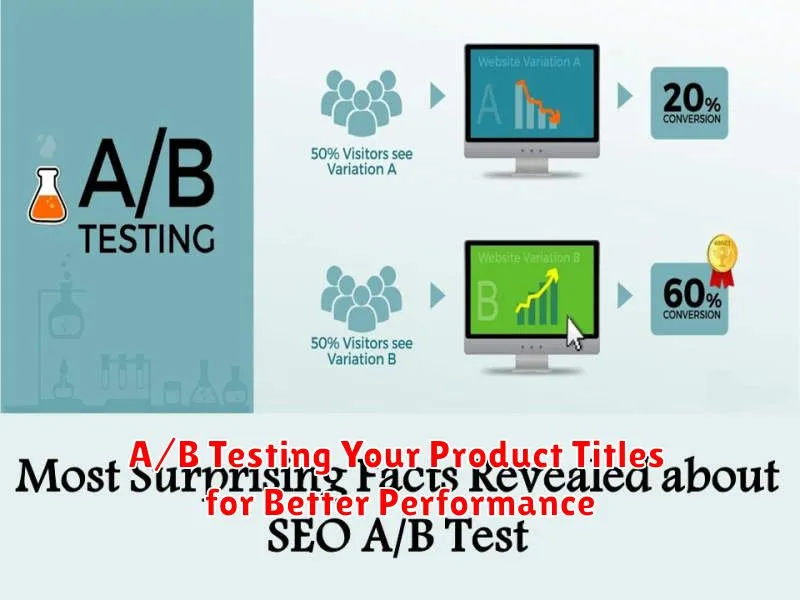
A/B testing, also known as split testing, is a crucial strategy for optimizing product titles. It involves comparing two versions of a title to see which performs better. This direct comparison provides valuable data on how even small changes can impact click-through rates and conversions.
To effectively A/B test your titles, start by identifying a control title (your current title) and create a variant title with a specific modification. This could involve changing keywords, adjusting the word order, adding power words, or experimenting with different lengths.
Show each version to a similar segment of your target audience over a set period. Monitor key metrics like click-through rate (CTR) from search results and conversion rate on your product page. The data gathered will reveal which version resonates more effectively with potential customers.
Remember to test only one element at a time to isolate the impact of each change. Continuously iterating and refining your titles based on A/B testing data will lead to significant improvements in their overall performance.
How to Track and Measure the Success of Your Product Titles
Tracking and measuring the success of your product titles is crucial for ongoing optimization. By analyzing key performance indicators (KPIs), you can identify what’s working and what needs improvement.
Key metrics to monitor include:
- Click-Through Rate (CTR): This metric measures how often your product titles are clicked on in search results. A higher CTR indicates a more compelling title.
- Conversion Rate: This measures how often clicks on your product title result in a sale. A high conversion rate suggests a good match between the title and the actual product.
- Keyword Ranking: Track where your products rank for target keywords. Improvement in ranking signifies that your title optimization efforts are effective.
- Bounce Rate: A high bounce rate for product pages accessed through specific titles may indicate a mismatch between the title and the product, leading users to quickly leave the page.
Utilize analytics platforms like Google Analytics and Google Search Console to gather this data. Regularly reviewing these metrics will provide valuable insights into the effectiveness of your product titles and guide further refinements.
Tools and Resources for Writing SEO-Friendly Product Titles

Optimizing product titles for search engines requires a blend of creativity and data analysis. Fortunately, various tools can assist in this process. Keyword research tools are invaluable for identifying relevant search terms with high search volume and low competition. These tools offer insights into what potential customers are searching for, allowing you to tailor your titles accordingly.
Several free and paid keyword research tools are available. Free options, while limited, can provide a starting point. Paid tools typically offer more extensive data and features, including competitor analysis and keyword trend tracking. Choosing the right tool depends on your budget and specific needs.
Beyond keyword research tools, title generators can help brainstorm and refine title variations. These tools often incorporate SEO best practices, suggesting optimal title length and keyword placement. While title generators can be helpful, it’s crucial to review and edit the suggested titles to ensure clarity, accuracy, and brand consistency.
