
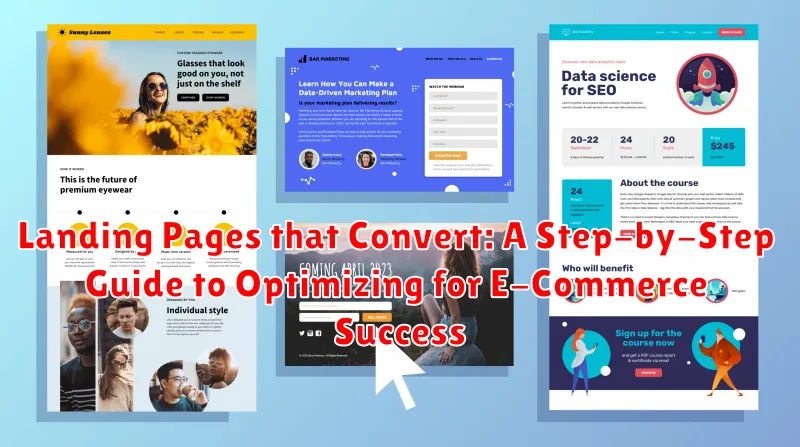
In the competitive landscape of e-commerce, a high-converting landing page is paramount to success. It’s not enough to simply drive traffic to your website; you need to effectively capture leads and convert them into paying customers. This comprehensive guide provides a step-by-step approach to optimizing your e-commerce landing pages for maximum conversion rates. We’ll explore the essential elements of a persuasive landing page, delve into conversion rate optimization (CRO) strategies, and provide actionable tactics to transform visitors into loyal buyers. Whether you’re just starting out or seeking to refine your existing landing pages, this guide will equip you with the knowledge and tools necessary to achieve e-commerce success.
From compelling headlines and persuasive copy to strategic call-to-actions and user-friendly design, we’ll cover every aspect of building high-converting landing pages. We will explore A/B testing techniques, analyze key performance indicators (KPIs), and discuss the importance of mobile responsiveness. By implementing the strategies outlined in this guide, you’ll be able to create landing pages that not only attract customers but also effectively guide them through the sales funnel, ultimately driving e-commerce growth and boosting your bottom line. Learn how to craft landing pages that convert and unlock the true potential of your online business.
Defining Your Target Audience for Landing Page Success
Before designing your landing page, clearly define your target audience. Understanding your ideal customer is crucial for creating a resonant experience that drives conversions. A well-defined audience allows for tailored messaging, relevant offers, and a focused user journey.
Consider these key factors when defining your target audience:
- Demographics: Age, gender, location, education, income level.
- Psychographics: Values, interests, lifestyle, attitudes.
- Buying behavior: Past purchases, brand preferences, purchasing frequency.
- Online behavior: Preferred social media platforms, websites visited, search queries.
By thoroughly researching and analyzing these elements, you can create detailed buyer personas. These semi-fictional representations of your ideal customer help you visualize and understand their motivations, needs, and pain points.
This deep understanding empowers you to create a landing page that truly connects with your target audience, increasing the likelihood of conversion.
Crafting Compelling Headlines and Copy that Resonates
Your headline is the first, and often only, impression you make on a potential customer. It needs to be compelling enough to grab their attention and make them want to read more. A strong headline should clearly communicate the value proposition of your product or service.
Follow these tips for crafting effective headlines:
- Keep it concise and to the point.
- Highlight the key benefit.
- Create a sense of urgency or scarcity.
- Use strong verbs.
Once you’ve captured their attention with a compelling headline, your copy needs to maintain their interest and persuade them to take action. Use clear and concise language that focuses on the benefits of your product or service. Address your target audience’s pain points and explain how your offering provides a solution.
Consider incorporating these elements into your copy:
- Testimonials and social proof
- Data and statistics
- A clear and concise value proposition
Designing a Visually Appealing and User-Friendly Layout
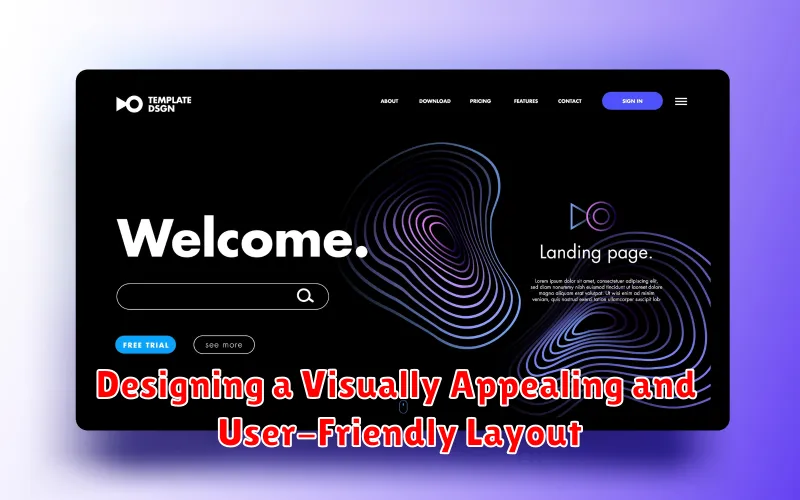
A visually appealing and user-friendly layout is crucial for landing page success. It guides visitors towards the desired action and enhances their overall experience. A cluttered or confusing design can lead to high bounce rates and lost conversions.
Prioritize visual hierarchy. Use headings, subheadings, and whitespace strategically to guide the visitor’s eye through the page. Ensure the most important elements, such as your unique selling proposition and call to action, stand out.
Mobile responsiveness is non-negotiable. Your landing page must render seamlessly across various devices, from desktops to smartphones. A responsive design guarantees a consistent and positive user experience for everyone.
Consider incorporating visual elements like high-quality product images or videos. Visuals can capture attention and communicate value quickly, especially in e-commerce. However, avoid overwhelming the page with too many visuals, which can detract from the core message.
Maintain brand consistency throughout the design. Use your brand colors, fonts, and logo to reinforce brand recognition and build trust. A cohesive visual identity adds professionalism and credibility to your landing page.
Creating Clear and Concise Call-to-Actions
A compelling call-to-action (CTA) is crucial for driving conversions on your landing page. It guides visitors towards the desired action, whether it’s making a purchase, signing up for a newsletter, or requesting a demo. Clarity and conciseness are key to an effective CTA.
Use action-oriented language that tells the visitor exactly what to do. Instead of a generic “Submit,” opt for specific verbs like “Get Your Free Quote,” “Shop Now,” or “Download the Guide.” This creates a sense of urgency and encourages immediate action.
Keep your CTA concise and easy to understand. Avoid jargon or technical terms that might confuse your target audience. A shorter CTA is often more effective, as it quickly communicates the value proposition and encourages clicks.
The design of your CTA button also plays a significant role. Use contrasting colors that make the button stand out from the rest of the page. Ensure the button size is large enough to be easily clickable on both desktop and mobile devices.
Test different CTAs to determine what resonates best with your audience. A/B testing can help you identify the most effective wording, color, and placement for your CTA button, ultimately leading to higher conversion rates.
Optimizing Landing Page Forms for Conversions
Forms are often the crux of a landing page’s conversion strategy. A poorly designed form can significantly hinder your success rate. Optimizing these forms requires a delicate balance between gathering essential information and minimizing user effort.
Reduce Form Fields: Only ask for absolutely necessary information. Every additional field increases the likelihood of abandonment. Consider what data is truly essential for your immediate sales or lead nurturing process.
Use Clear and Concise Labels: Ambiguous labels create confusion and frustration. Ensure each field’s purpose is immediately apparent to the user.
Implement Input Validation: Real-time feedback helps users correct errors immediately, streamlining the submission process and reducing invalid submissions.
Mobile Optimization: Forms must be fully functional and easy to use on all devices. Consider finger-friendly input fields and responsive design principles.
A/B Test Different Form Variations: Experiment with different form lengths, field placements, and button styles to identify the highest converting configuration for your specific audience.
A/B Testing Your Landing Pages for Continuous Improvement
A/B testing is crucial for optimizing your landing pages and achieving higher conversion rates. It involves creating two slightly different versions (A and B) of a page and showing them to separate groups of visitors to see which performs better.
Key elements to A/B test:
- Headlines: Test different wording, length, and phrasing.
- Call-to-Actions: Experiment with button colors, text, and placement.
- Images and Videos: Try different visuals to see what resonates best.
- Form Fields: Test the number and type of fields required.
- Layout and Design: Experiment with different layouts and overall design aesthetics.
Best practices for A/B testing:
- Test one element at a time for clear results.
- Use a statistically significant sample size.
- Run tests for an adequate duration.
- Continuously analyze and iterate based on data.
By consistently A/B testing and analyzing the results, you can continuously improve your landing pages and maximize their effectiveness in driving conversions.
Integrating Landing Pages with Your Marketing Campaigns
Effective landing pages don’t exist in isolation. They must be seamlessly integrated into your broader marketing campaigns to maximize their impact. A key aspect of this integration is ensuring a consistent message and user experience across all touchpoints.
Connect your landing pages with your ongoing marketing efforts, such as email marketing, social media advertising, and search engine optimization (SEO). For example, a dedicated landing page for a specific product promotion advertised in an email campaign can significantly improve conversion rates compared to directing users to a generic product page.
Tailor your landing page content to match the specific messaging and audience targeted by each campaign. This focused approach ensures relevance and reduces friction in the user journey, encouraging conversions.
Consider the following when integrating:
- Source Alignment: Where is your traffic coming from (e.g., social media, email)? Match the landing page messaging to the source.
- Campaign Goals: What do you want visitors to do? (e.g., purchase, sign up). Ensure the call to action reflects this goal.
- Consistent Branding: Maintain consistent branding elements (logo, colors, fonts) across your website and landing pages.
Tracking and Analyzing Landing Page Performance
Tracking and analyzing your landing page performance is crucial for understanding what’s working and what needs improvement. This data-driven approach allows you to refine your strategies and optimize for higher conversions.
Start by setting up key performance indicators (KPIs). Focus on metrics relevant to your business goals, such as conversion rate, bounce rate, time spent on page, and average order value.
Utilize analytics tools to monitor these KPIs. Regularly review your data to identify trends and patterns. For example, a high bounce rate could indicate a problem with your page’s design, messaging, or targeting.
Analyzing data helps pinpoint areas for optimization. Perhaps a specific call-to-action performs poorly, suggesting a need for revision. By continually monitoring and adjusting, you can ensure your landing pages are effectively driving results.
Leveraging Social Proof to Build Trust and Credibility
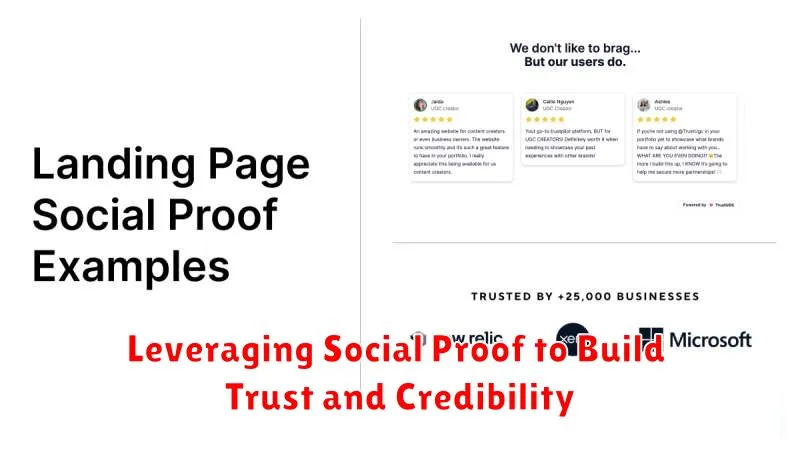
Social proof is a powerful tool for increasing conversions on your landing pages. By showcasing positive experiences from others, you can build trust and encourage potential customers to take action. Testimonials, reviews, and social media shares are all forms of social proof that can be effectively integrated into your landing page design.
Featuring customer testimonials directly on your landing page can significantly impact visitor perception. Select testimonials that highlight the key benefits of your product or service and address common customer concerns. Consider including a headshot and full name to add authenticity to the testimonials.
Displaying positive reviews from reputable platforms can further enhance credibility. Showcase aggregated review scores or integrate a live review feed to provide real-time feedback. Encourage satisfied customers to leave reviews after their purchase.
Integrating social media share buttons allows visitors to easily share your landing page with their network, expanding your reach and potentially driving more traffic. High share counts can also serve as a form of social proof, indicating positive sentiment and interest in your offering.
