
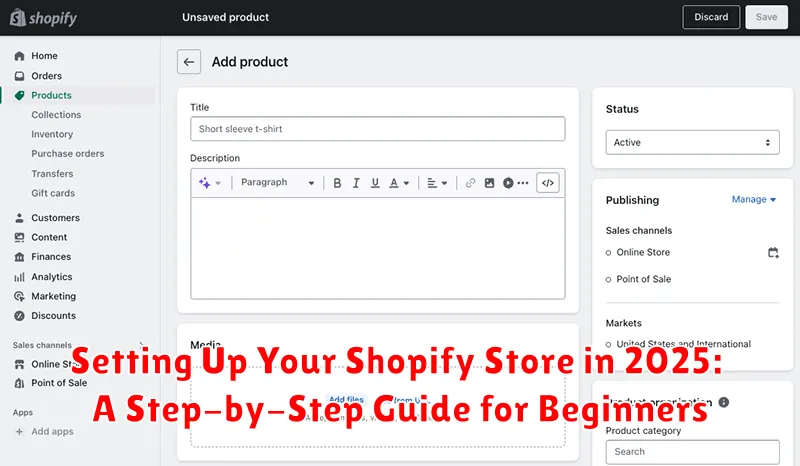
Launching an online business can feel daunting, but with the right platform and guidance, it can be a rewarding experience. In 2025, Shopify remains a leading eCommerce platform, empowering entrepreneurs to build and manage their online stores effectively. This comprehensive, step-by-step guide is designed for beginners looking to set up their Shopify store in 2025. We’ll cover everything from choosing a Shopify plan to customizing your store design, adding products, configuring shipping and payment options, and launching your online store to the world. Whether you’re selling physical goods, digital products, or services, this guide will provide you with the essential knowledge and resources to create a successful Shopify store.
Navigating the world of eCommerce can be challenging, especially for newcomers. This guide aims to simplify the process of setting up a Shopify store by breaking down each step into manageable tasks. We’ll delve into the nuances of Shopify’s features, offering practical advice and insights to help you optimize your store for success. From understanding the different Shopify pricing plans and selecting the right one for your needs, to mastering the art of product photography and crafting compelling product descriptions, this guide will equip you with the tools you need to build a thriving online business using Shopify in 2025.
Choosing the Right Shopify Plan for Your Needs
Selecting the appropriate Shopify plan is crucial for your business’s success. Shopify offers several tiers, each designed to accommodate different business sizes and requirements. Carefully consider your budget, sales volume, and required features before making a decision.
Basic Shopify is a great starting point for new businesses with limited budgets. It offers essential features like online store creation, blog functionality, and 24/7 support.
Shopify is the most popular plan and provides a balanced set of features for growing businesses. It includes everything in the Basic plan, plus additional features like gift cards and professional reports.
Advanced Shopify caters to larger businesses with higher sales volumes. This plan offers advanced reporting, lower transaction fees, and greater control over shipping.
Finally, Shopify Plus is an enterprise-grade solution for high-volume businesses needing customized solutions and dedicated support.
Think about your current needs and potential growth when choosing. Don’t overspend on features you won’t utilize immediately, but also consider scalability to avoid needing to upgrade frequently.
Customizing Your Shopify Theme: Design and Branding
Once you’ve selected your Shopify plan, the next crucial step is customizing your store’s theme to reflect your brand identity. Your theme dictates the overall look and feel of your online store.
Choosing a theme: Explore Shopify’s Theme Store, offering both free and premium options. Consider your industry, target audience, and desired aesthetic when making your selection. Preview themes to see how they adapt to different devices.
Customization options: Shopify’s theme editor allows for extensive customization without coding. You can modify colors, fonts, and layout elements. More advanced customization is possible by editing the theme’s code directly, but this requires some technical expertise.
Branding elements: Incorporate your logo, brand colors, and fonts consistently throughout your store. A cohesive brand presence strengthens recognition and builds trust with your customers. Ensure your brand messaging is clear and reflected in your theme’s design.
Adding Products to Your Shopify Store: Descriptions, Images, and Pricing
Adding products is a crucial step in setting up your Shopify store. This involves providing detailed descriptions, high-quality images, and competitive pricing.
Product Descriptions: Write clear and concise descriptions that highlight the key features and benefits of each product. Use strong keywords for search engine optimization (SEO). Consider addressing frequently asked questions within the description to preemptively assist customers.
Product Images: Use high-resolution images that showcase your products from different angles. Multiple images can allow customers to zoom in and see details. A consistent style across all product photos contributes to a professional look.
Pricing: Research competitor pricing and consider your profit margins when setting prices. You can offer different pricing tiers for variations like size or color. Strategically using sale prices can also incentivize purchases.
Setting Up Payment Gateways and Processing Transactions
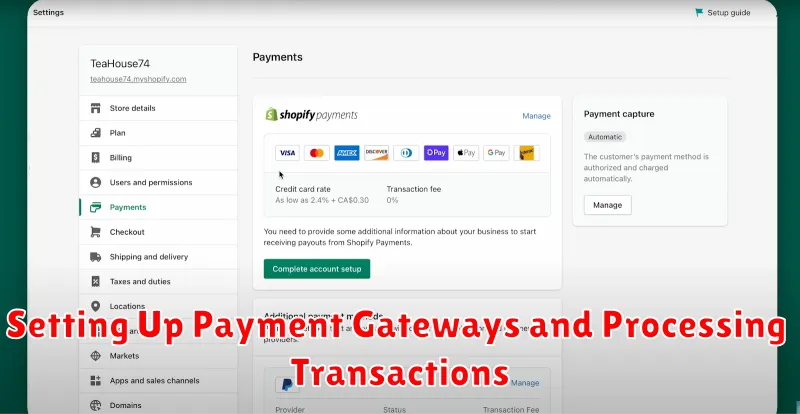
A crucial step in setting up your Shopify store is configuring payment gateways to accept payments from customers. Shopify offers a variety of integrated payment gateways, including Shopify Payments, as well as numerous third-party providers.
Shopify Payments, Shopify’s own payment gateway, offers a streamlined setup process and eliminates transaction fees. Other popular options include PayPal, Stripe, and Square. Consider factors such as transaction fees, supported currencies, and your target market when choosing a gateway.
To activate a payment gateway, navigate to the “Payments” section in your Shopify admin. Select your preferred provider and follow the instructions to connect your account. Ensure all required information is accurately entered to avoid any processing issues. You may need to provide business details and banking information for verification.
Testing the payment process thoroughly is essential before launching your store. Use test mode to simulate transactions and confirm everything functions correctly. This will prevent potential problems and ensure a smooth checkout experience for your customers.
Configuring Shipping Options and Rates
Shipping is a critical aspect of your online store. Properly configured shipping options ensure customer satisfaction and manage your operational costs. Shopify offers flexible shipping settings to cater to diverse business needs.
Start by navigating to the “Shipping and delivery” section in your Shopify admin. Here you can define shipping zones, which group countries or regions you ship to. This allows for tailored shipping rates based on location.
Next, establish your shipping rates. You can offer free shipping, flat rates, or calculated rates based on weight, dimensions, or distance. Consider offering different shipping speeds (e.g., standard, expedited) with varying prices.
For calculated rates, integrate with carriers like USPS, UPS, or FedEx to get real-time shipping quotes. This provides accurate pricing for your customers and avoids unexpected shipping costs for your business. Input the dimensions and weights of your packaging for accurate calculations.
Clearly communicate your shipping policies to customers at checkout. Transparency builds trust and reduces potential issues related to shipping costs and delivery times.
Essential Shopify Apps for a Successful Launch
Choosing the right apps can significantly enhance your Shopify store’s functionality and contribute to a successful launch. Here are a few essential categories and examples to consider:
Boosting Sales and Conversions
Apps like product upsell and cross-sell tools can encourage customers to purchase more, increasing your average order value. Countdown timers and limited-time offer apps create urgency, motivating immediate purchases.
Enhancing Customer Experience
Improve customer satisfaction with apps that offer live chat support, enabling real-time assistance. Review and testimonial apps build trust and social proof.
Streamlining Store Management
Inventory management apps automate stock control and prevent overselling. Shipping and fulfillment apps simplify logistics and provide accurate shipping rates.
Remember to research and choose apps based on your specific business needs. Overloading your store with unnecessary apps can slow down performance. Start with a few essential apps and gradually add more as your business grows.
Marketing Your Shopify Store: SEO and Social Media
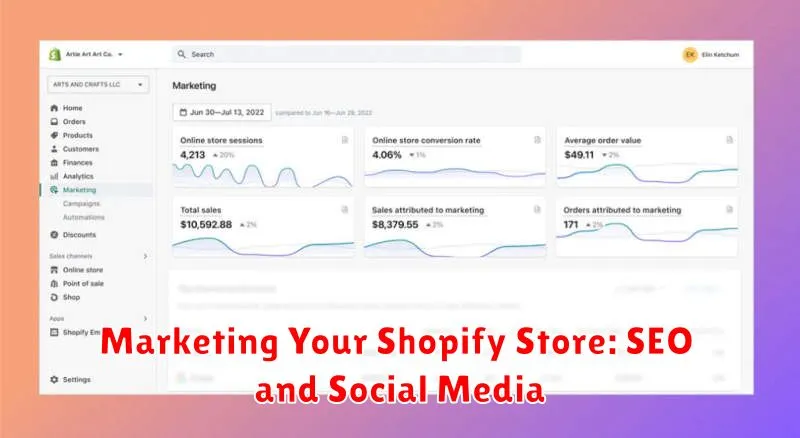
Driving traffic to your new Shopify store requires a robust marketing strategy encompassing both SEO (Search Engine Optimization) and social media engagement. SEO focuses on optimizing your store to rank higher in search engine results, making it easier for potential customers to find you organically.
Key SEO tactics include keyword research, optimizing product descriptions and page titles, and building high-quality backlinks. Consider using Shopify apps that assist with SEO tasks like keyword suggestions and sitemap generation.
Social media marketing complements SEO by building brand awareness, engaging directly with your target audience, and driving traffic through targeted campaigns. Choose platforms relevant to your niche. Create engaging content, run contests, and utilize paid advertising to expand your reach.
A well-rounded marketing strategy incorporating both SEO and social media is essential for attracting customers and growing your Shopify business in the competitive online marketplace.
Understanding Shopify Analytics and Reporting
Shopify analytics are crucial for understanding your store’s performance and making informed decisions. This section will cover the basics of navigating and interpreting your store’s data.
Key Report Types
Shopify offers a variety of reports covering key aspects of your business. The Dashboard provides an overview of key metrics like sales, orders, and conversion rates. Product reports reveal top-selling items and potential inventory issues. Sales reports help you track revenue trends over time.
Using the Reports
Access your reports by navigating to the Analytics section in your Shopify admin. You can customize the date range for your reports to analyze specific periods. Use the filtering options to drill down into specific data points, such as sales by channel or location.
Interpreting the Data
By analyzing your Shopify reports, you can identify trends, understand customer behavior, and optimize your store’s performance. For example, a low conversion rate might indicate issues with your product pages or checkout process.
Leveraging Reports for Growth
Regularly reviewing your Shopify analytics is essential for making data-driven decisions. By understanding your store’s performance, you can identify areas for improvement and implement strategies to drive growth and profitability.
Managing Inventory and Orders on Shopify
Efficient inventory and order management is crucial for a successful Shopify store. Shopify’s built-in features simplify these tasks, letting you focus on growth.
Inventory Management
Tracking inventory is straightforward. Input product details including SKUs, quantities, and supplier information. Shopify automatically updates stock levels as orders are processed. Set up low stock alerts to avoid selling out unexpectedly. Consider utilizing Shopify’s inventory forecasting tools to predict future demand.
Order Management
The Orders page is your central hub for processing orders. View order details, fulfill orders, issue refunds, and manage customer communication. Customize the fulfillment process according to your needs, integrating with shipping providers for streamlined operations. Utilize order tagging and filtering for efficient organization.
