

Understanding your ideal customer is paramount to the success of any business. This comprehensive guide to creating effective buyer personas will equip you with the knowledge and tools necessary to identify, analyze, and understand your target audience. Developing robust buyer personas allows you to tailor your marketing strategies, product development, and overall customer experience to resonate with the specific needs and desires of your ideal customer. By deeply understanding your target audience, you can optimize your resources, enhance customer engagement, and ultimately drive more conversions.
This guide delves into the crucial aspects of buyer persona development, from identifying key demographics and psychographics to understanding customer motivations and pain points. Learn how to create actionable buyer personas that go beyond simple demographics and provide rich insights into the behaviors and preferences of your ideal customers. By the end of this guide, you’ll possess the practical skills to craft effective buyer personas that inform your business strategies and enable you to connect with your target audience on a deeper level, leading to stronger customer relationships and increased business growth.
What is a Buyer Persona and Why is it Important?
A buyer persona is a semi-fictional representation of your ideal customer. It’s based on research and data about your existing and potential customers, and it goes beyond basic demographics. A well-developed persona embodies the customer’s motivations, goals, challenges, and buying behaviors.
Why are buyer personas so important? They provide critical insights that drive effective marketing strategies. By understanding your ideal customer’s needs and pain points, you can:
- Target your marketing efforts more effectively: Craft messaging that resonates with your audience and reaches them through the right channels.
- Improve product development: Create products and services that meet the specific needs and desires of your target market.
- Enhance sales and customer service: Equip your teams with the knowledge to better engage with prospects and customers.
- Align your marketing and sales teams: Provide a common understanding of the customer, fostering better collaboration and communication.
Identifying Your Target Audience: Research and Data Collection
Once you understand the importance of buyer personas, the next crucial step is identifying your target audience. This involves in-depth research and data collection to gain actionable insights into your potential customers.
Start by analyzing your existing customer base. Look for trends in demographics, purchasing behavior, and engagement patterns. Customer Relationship Management (CRM) systems are invaluable resources for this data.
Conducting market research is also essential. Surveys, interviews, and focus groups can provide qualitative data that reveals the motivations, pain points, and decision-making processes of your target audience. Analyzing industry reports and competitor data can offer valuable contextual information.
Website analytics provide another rich source of data. Tools like Google Analytics can track user behavior on your website, revealing which pages are most popular, how long visitors stay, and what actions they take. This data can help you understand how your target audience interacts with your brand online.
Remember, thorough research and accurate data are the foundation of effective buyer personas.
Key Elements of a Buyer Persona: Demographics, Psychographics, and Behavior
A well-defined buyer persona comprises several key elements that provide a holistic understanding of your ideal customer. These elements can be broadly categorized into demographics, psychographics, and behavior.
Demographics paint a factual picture of your persona. This includes information like age, gender, location, education level, income, occupation, and family status. These tangible details provide a basic understanding of your target audience.
Psychographics delve deeper into your persona’s values, beliefs, interests, lifestyle, and personality traits. Understanding these elements allows you to connect with your audience on a more emotional level, crafting messaging that resonates with their motivations and aspirations.
Behavior focuses on your persona’s actions and interactions. This includes their purchasing habits, brand loyalty, online behavior, and preferred communication channels. Analyzing behavior helps you understand how your persona interacts with your brand and the market as a whole.
Creating Buyer Persona Profiles: Bringing Your Ideal Customer to Life
After gathering the necessary data, the next step is crafting detailed buyer persona profiles. These profiles should go beyond simple demographics and delve into the nuances of your ideal customers’ behaviors, motivations, and goals.
Give each persona a fictional name and even a photo to make them more relatable and memorable. Summarize the key demographic information like age, location, job title, and income level.
Clearly outline their psychographic traits, including their values, interests, lifestyle, and attitudes. Describe their buying behavior, such as their preferred purchasing channels, research methods, and decision-making process.
Highlight their goals and challenges. What are they trying to achieve? What obstacles are they facing? By understanding these factors, you can tailor your messaging and offerings to resonate with their specific needs and aspirations.
Using Buyer Personas in Marketing: Targeting and Personalization
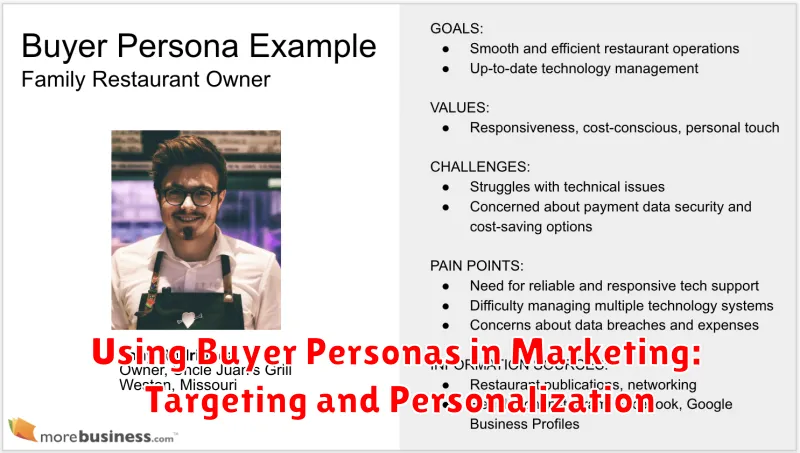
Once your buyer personas are defined, they become invaluable tools for targeted and personalized marketing efforts. By understanding your ideal customer’s needs, motivations, and preferred channels, you can tailor your messaging and campaigns for maximum impact.
Targeted Content Creation: Develop content specifically addressing the pain points and interests of each persona. This could include blog posts, social media updates, or email newsletters tailored to their specific needs.
Channel Optimization: Determine where your personas spend their time online and focus your marketing efforts on those channels. Are they active on LinkedIn? Do they prefer Instagram? Knowing this allows you to optimize your budget and reach.
Personalized Messaging: Craft messaging that resonates with each persona’s individual characteristics and motivations. Address them by name in email campaigns, tailor website copy to their specific needs, and personalize offers based on their past behavior.
Product Development: Use persona insights to inform product development decisions. By understanding what your ideal customers truly want and need, you can create products and services that meet their expectations.
Examples of Effective Buyer Personas
Understanding the practical application of buyer personas is crucial. Here are two examples illustrating effective persona development:
Example 1: “Sarah,” the Tech-Savvy Millennial
Sarah is a 28-year-old marketing manager in a mid-sized tech company. She is highly tech-savvy, constantly seeking new productivity tools and software. She prioritizes efficiency and collaboration in her work. Sarah primarily uses online resources for research and relies heavily on peer reviews when making purchasing decisions. Her goals include streamlining workflows and improving team communication.
Example 2: “John,” the Small Business Owner
John is a 50-year-old owner of a local bakery. He has limited technical expertise and prefers simple, easy-to-use solutions. Budget is a significant concern for him. John primarily relies on referrals from other local business owners. His goals include increasing customer loyalty and expanding his business reach within the community.
Common Mistakes to Avoid When Creating Buyer Personas
Creating effective buyer personas requires careful consideration and research. Avoiding common pitfalls will ensure your personas accurately represent your target audience. Here are some mistakes to watch out for:
Relying on Assumptions
Basing personas on guesswork or gut feelings, rather than data-backed research, leads to inaccurate representations. Validate your assumptions with market research, customer surveys, and interviews.
Creating Too Many Personas
While representing diverse customer segments is important, creating too many personas can dilute your focus. Concentrate on the most critical customer groups that drive the majority of your business.
Lack of Specificity
Vague descriptions make personas unusable. Include specific details like job titles, industry, age range, goals, challenges, and preferred communication channels.
Ignoring Negative Personas
Understanding who your ideal customer isn’t is just as important. Define negative personas to refine targeting and avoid wasting resources on unqualified leads.
Keeping Your Buyer Personas Up-to-Date: Adapting to Changing Customer Needs
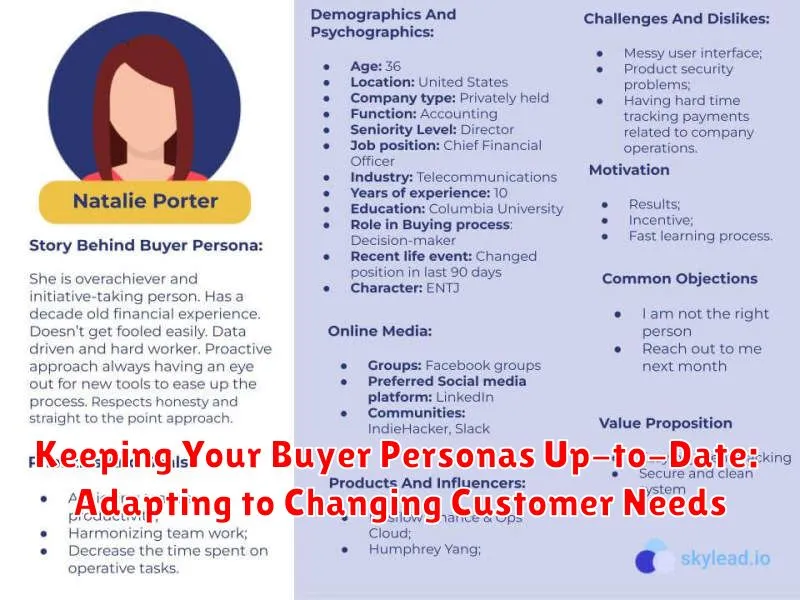
Your buyer personas are not static documents. Customer behavior, market trends, and even your own product offerings evolve over time. Regularly updating your personas is crucial for maintaining their accuracy and effectiveness.
Review Frequency: Aim to revisit and revise your buyer personas at least every six months. More frequent updates may be necessary in rapidly changing industries or after significant product launches or market shifts.
Data Collection Methods: Employ a variety of methods to gather fresh data. Analyze website analytics, review customer service interactions, conduct surveys, and interview existing customers to gain insights into evolving needs and preferences.
Key Indicators of Change: Pay close attention to shifts in demographics, purchasing behavior, pain points, and preferred communication channels. These are key indicators that your personas may need adjustments.
Iterative Updates: Don’t overhaul your personas completely every time. Focus on making iterative updates based on the data collected. This ensures your personas remain relevant and reflective of your target audience.
Tools and Resources for Buyer Persona Development
Several tools and resources can assist in creating effective buyer personas. Leveraging these resources can streamline the process and ensure comprehensive persona development.
Software and Online Platforms
Various software platforms are specifically designed for buyer persona creation. These tools often offer templates, data analysis features, and collaborative workspaces. They can help organize research data, visualize persona attributes, and share findings with your team.
Market Research Reports and Data
Market research reports provide valuable insights into target demographics, industry trends, and consumer behavior. Utilizing existing data can inform persona development by providing a foundational understanding of your target audience.
Customer Surveys and Interviews
Directly engaging with your existing customer base through surveys and interviews offers invaluable firsthand information. These methods allow you to gather qualitative data and understand your customers’ motivations, pain points, and buying processes.
Templates and Worksheets
Numerous free and paid templates and worksheets are available online to guide you through the persona development process. These resources provide a structured approach for gathering and organizing relevant information.
