
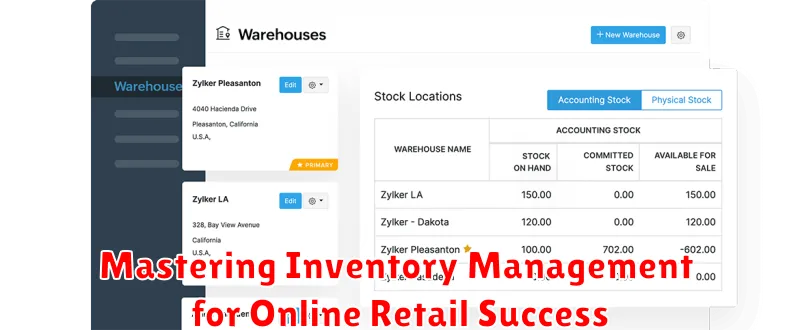
In today’s competitive e-commerce landscape, effective inventory management is paramount to achieving online retail success. Mastering inventory management not only ensures you have the right products available at the right time to meet customer demand, but also plays a crucial role in optimizing your supply chain, minimizing carrying costs, and ultimately maximizing profitability. This comprehensive guide will delve into the essential strategies and techniques required to optimize your inventory, providing actionable insights to help you navigate the complexities of online retail inventory management and achieve sustainable growth.
Whether you’re a seasoned online retailer or just starting out, understanding the nuances of inventory control, demand forecasting, and warehouse management is essential for success. From implementing robust inventory tracking systems to leveraging data-driven analytics for informed decision-making, this article will equip you with the knowledge and tools necessary to master inventory management and propel your online retail business to new heights. Learn how to streamline your operations, reduce waste, and improve customer satisfaction through efficient inventory management practices.
Understanding the Importance of Inventory Management
Inventory management plays a crucial role in the success of any online retail business. It’s the process of overseeing the flow of goods in and out of your warehouse, ensuring you have the right products, in the right quantity, at the right time, and in the right place.
Effective inventory management directly impacts customer satisfaction. Having products readily available prevents stockouts, which lead to lost sales and disappointed customers. It also minimizes the risk of overstocking, which ties up valuable capital and increases storage costs.
Proper management allows businesses to accurately forecast demand, optimize stock levels, and streamline fulfillment processes. This leads to improved efficiency, reduced waste, and increased profitability. By understanding the importance of inventory management, online retailers can gain a competitive edge and achieve sustainable growth.
Key Components of Effective Online Retail Inventory Management
Effective online retail inventory management hinges on several key components working in harmony. Accurate forecasting is crucial, predicting demand to ensure sufficient stock without overstocking. This involves analyzing sales data, market trends, and seasonality.
Real-time inventory tracking provides up-to-the-minute visibility into stock levels across all locations. This allows for proactive reordering and prevents stockouts. Integrating inventory tracking with sales channels is essential for accuracy.
Efficient warehouse management streamlines the physical handling of inventory. Optimized processes for receiving, storing, and picking goods minimize errors and expedite fulfillment. Clear organization and designated storage locations contribute significantly to efficiency.
Strategic supplier management ensures reliable sourcing and timely delivery of products. Establishing strong relationships with suppliers and negotiating favorable terms are vital for maintaining a consistent flow of inventory.
Choosing the Right Inventory Management System for Your Business
Selecting the appropriate inventory management system is crucial for efficient operations and informed decision-making. Several factors should guide your choice.
Business Size and Complexity: A small business with limited SKUs might find basic spreadsheet software sufficient. However, rapidly growing businesses with diverse product lines require more robust systems offering features like real-time tracking and automated reporting.
Integration Capabilities: Seamless integration with existing platforms, such as your eCommerce platform, accounting software, and shipping tools, is essential for streamlined workflows and data accuracy.
Scalability: Choose a system that can adapt to your future growth. A scalable system accommodates increasing sales volumes, expanding product offerings, and evolving business needs.
Cost and Features: Balance the system’s cost with its functionality. Evaluate the features offered, such as demand forecasting, barcode scanning, and reporting capabilities, to ensure they align with your specific requirements.
Strategies for Optimizing Inventory Levels and Reducing Costs
Optimizing inventory levels is crucial for profitability and operational efficiency. Holding excess inventory ties up capital and increases storage costs, while insufficient inventory leads to lost sales and dissatisfied customers. Finding the right balance is key.
Demand forecasting plays a vital role. Accurately predicting future demand allows businesses to stock the right amount of inventory at the right time. Leveraging historical sales data, seasonality trends, and market analysis can significantly improve forecasting accuracy.
Implementing a Just-in-Time (JIT) inventory system can minimize storage costs and reduce the risk of obsolescence. JIT relies on close coordination with suppliers to receive inventory only when needed for production or fulfillment.
Regularly conducting inventory audits helps identify discrepancies between recorded inventory and actual stock levels. This allows for timely adjustments and prevents stockouts or overstocking.
Employing the ABC analysis technique categorizes inventory based on its value and consumption rate. This allows businesses to prioritize high-value items and optimize inventory control efforts accordingly.
Best Practices for Managing Inventory in a Multi-Channel Environment

Managing inventory across multiple sales channels presents unique challenges. Centralized inventory management is crucial. This provides a single, real-time view of stock levels across all platforms, preventing overselling and stockouts.
Consistent product information is essential. Ensure product descriptions, images, and pricing are uniform across all channels to maintain brand consistency and avoid customer confusion.
Integrated order management streamlines fulfillment. Regardless of where an order originates, it should be processed efficiently through a centralized system. This facilitates accurate inventory updates and timely shipping.
Channel-specific strategies should be considered. Analyze sales data for each channel to understand demand patterns and adjust inventory accordingly. Certain products may perform better on specific platforms, requiring tailored inventory strategies.
Regular performance monitoring and analysis are key. Track key metrics like sell-through rate and inventory turnover by channel to identify areas for improvement and optimize inventory allocation across your sales channels.
Integrating Inventory Management with Other Business Processes
Effective inventory management isn’t a standalone operation. It’s a crucial piece of a larger puzzle, intricately linked with other core business processes. Integrating your inventory system with these processes streamlines operations and maximizes efficiency.
Consider the connection between inventory and sales. Real-time inventory updates ensure accurate availability information for customers, preventing overselling and disappointment. This integration also allows for sales forecasting based on current stock levels, informing purchasing decisions.
Order fulfillment is another critical link. An integrated system triggers order processing automatically when a sale is made, updating inventory counts simultaneously and generating pick lists for the warehouse team. This reduces fulfillment time and enhances customer satisfaction.
Integration with accounting and finance provides a clear view of inventory value, cost of goods sold (COGS), and overall profitability. Accurate inventory data is essential for financial reporting and informed decision-making about pricing, promotions, and future investments.
Finally, integrating inventory management with your supplier relationship management (SRM) system improves communication and collaboration with suppliers. Automated purchase orders based on low stock levels and real-time tracking of inbound shipments optimize the supply chain and minimize stockouts.
Analyzing Inventory Data to Improve Decision-Making
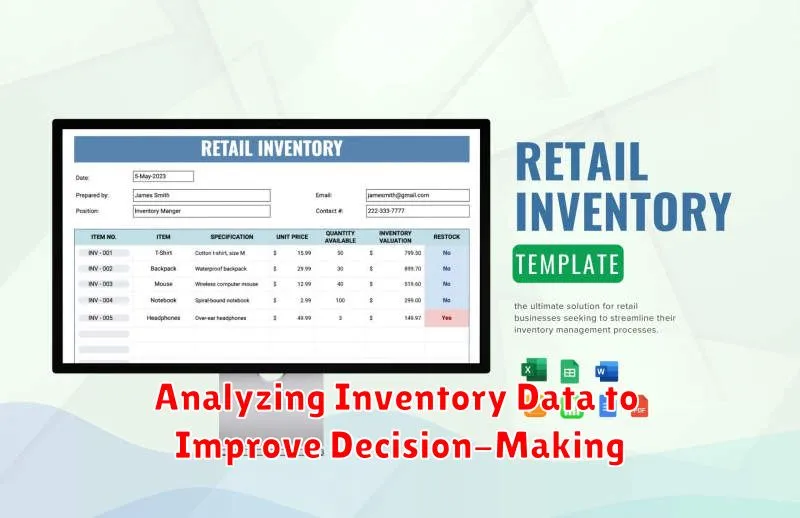
Data analysis is crucial for effective inventory management. By examining key metrics, online retailers can gain valuable insights to optimize stock levels, improve forecasting, and boost profitability.
Key performance indicators (KPIs) like inventory turnover rate, carrying costs, and stockout rate provide a clear picture of inventory performance. Analyzing these metrics helps identify areas for improvement.
Sales data analysis reveals product performance trends. Understanding which products are selling well and which are not allows for informed decisions regarding purchasing and stocking levels. This prevents overstocking slow-moving items and ensures sufficient supply of popular products.
Demand forecasting leverages historical sales data, seasonality, and market trends to predict future demand. Accurate forecasting allows for proactive inventory adjustments, minimizing stockouts and maximizing sales opportunities.
Common Inventory Management Mistakes and How to Avoid Them
Effective inventory management is crucial for online retail success. However, several common mistakes can hinder efficiency and profitability. Understanding these pitfalls is the first step towards avoiding them.
Overstocking
Holding excess inventory ties up capital and increases the risk of obsolescence and storage costs. Accurate demand forecasting and regular inventory reviews are key to preventing overstocking.
Understocking
Insufficient inventory leads to stockouts, lost sales, and dissatisfied customers. Implement safety stock levels and real-time inventory tracking to mitigate this risk.
Manual Inventory Tracking
Relying on manual processes is time-consuming and prone to errors. Invest in an inventory management system to automate tracking and improve accuracy.
Ignoring Data Analysis
Inventory data provides valuable insights into sales trends, product performance, and customer behavior. Regularly analyze this data to optimize inventory levels and improve decision-making.
Lack of Quality Control
Damaged or defective inventory can lead to returns and lost revenue. Implement robust quality control procedures throughout the supply chain to minimize these issues.
Future Trends in Online Retail Inventory Management
The future of online retail inventory management is rapidly evolving, driven by technological advancements and changing consumer expectations. Artificial intelligence (AI) and machine learning (ML) are poised to revolutionize forecasting, demand planning, and automated replenishment. These technologies can analyze vast datasets to predict future demand with greater accuracy, minimizing stockouts and overstocking.
Blockchain technology offers enhanced transparency and traceability across the supply chain. This can lead to improved inventory control, reduced counterfeiting, and more efficient product recalls.
The rise of omnichannel fulfillment, where customers can order online and pick up in-store or vice-versa, presents new inventory management challenges. Integrated inventory systems that provide real-time visibility across all sales channels will be essential for success in this environment.
Automated warehousing and robotics are gaining traction, streamlining operations and reducing labor costs. Automated guided vehicles (AGVs) and robots can handle repetitive tasks like picking, packing, and sorting, freeing up human workers for more complex tasks.
Sustainability is also becoming a key consideration. Inventory management practices that minimize waste, optimize transportation, and prioritize eco-friendly packaging are increasingly important for environmentally conscious consumers and businesses.
